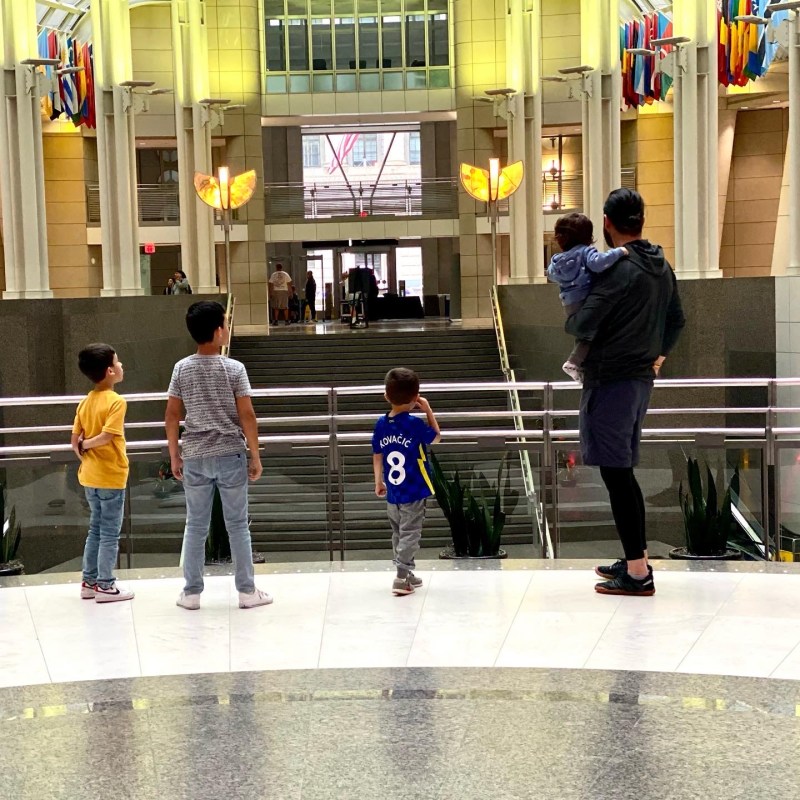
Marking the second anniversary of the fall of Kabul, we’re proud to share Hasib Satary’s story. Hasib, a former LSSNCA program participant, is now our director of employment serivces in Virginia. We hope his story resonates with you as it represents scores of Afghans across the U.S. who have made America their new home after supporting our efforts in Afghanistan for most of their lives. For many, like Hasib, the story starts decades before August 15, 2021.
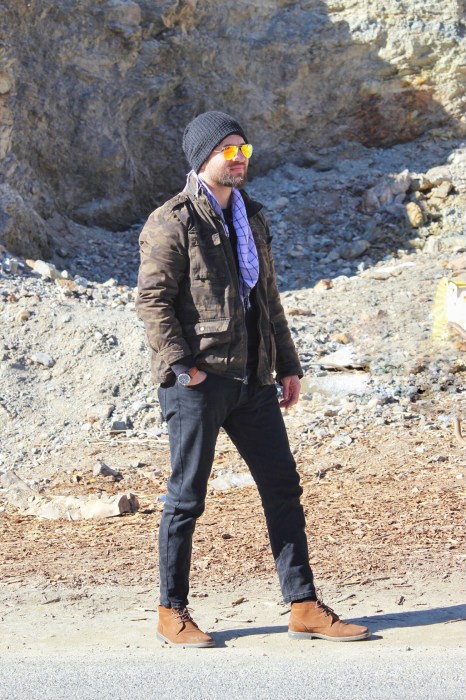
Post-Soviet Invasion and Early Kabul Years
I was born in Kabul during the aftermath of the Soviet withdrawal from our country – my parents had moved from a small war-torn town seeking relative safety. At the time, my parents only had daughters, which caused friction between my mother and my father’s family who made their desire for a male heir very clear. My birth brought a sense of relief for my mom.
Being born in Kabul afforded me the opportunity to attend school despite my family’s circumstances. Education was not common in my family, and I stood out as the only student with uneducated parents in my class. Others had low expectations of me because of this, but I defied those expectations and excelled in middle school.
Civil War
Many people were forced to flee the country due to the onset of civil war, but we remained due to financial constraints. Rockets frequently threatened our home. Death was so close to us. I remember one day, upon hearing blasts, our neighbors rushed to assist victims, and I climbed to our rooftop to see what was going on. I saw my neighbor, Wahid, running toward my mother – he had lost his left hand in the blast. My mother, in shock, immediately took him for medical support. The following day, another neighborhood friend succumbed to a blast. We lost our friends, but somehow, we survived.
Rise of the Taliban
When I was 14 or 15, the Taliban came along and restricted everything. People continued to leave the country, but we did not have the money to join them. My sisters, who were in high school at the time, had to stop going to school due to the ban on girls’ education. For me, however, I was allowed to continue but was forced to take a six month break due to everything going on. One day upon returning, I felt ill, and my parents told me to stay home. A rocket struck near my school that same day, claiming multiple lives. I always wonder if it is my luck or someone’s prayers that is always keeping me safe.
One thing I appreciate about my mom was her insistence on me to study English. It is as if she knew what was coming. My dad pushed for focusing on technical skills like being a mechanic so I could help with providing for the family, and I wanted to help my dad that way, but my mom won the argument – I went to study English. My mom would ask me to show her my books. She cannot read, but I respected her commitment. She used to say, “one thing I know is that religious books are not the only books for people to learn, there are a lot of books to read in the world.”
September 11
When the attacks happened, we did not know much about it because we did not have access to international news. Instead, we followed local news of the assassination of the leader of the Northern Alliance, an anti-Taliban coalition, who was killed by Al Qaeda. I did not fully grasp the impact of the 9/11 attacks at the time. A few months later, I returned to class, and heard that the Northern Alliance was joining forces with the U.S. We happened to live close to an Al Qaeda base, so we were so scared. We knew there would be rockets shot from there, and the first blast came shortly thereafter. Thankfully their antenna was shot down by a B-52 airstrike, but targeted blasts continued on roads, cars, and other places.
A wave of journalists started flowing into Kabul, and someone suggested I become a translator. I was about 15 or 16 years old, and ran to the Intercontinental Hotel where most were staying to see if they needed an interpreter, but they kept saying no. Finally, a friend helped me get a connection. I even talked to Christiane Amanpour of CNN, but she would not hire me because I was under 18. One day another CNN journalist linked up with me. We visited a renowned Kabul market where American brands were sold, their purchases captured for a documentary highlighting Afghanistan’s newfound freedom in embracing U.S. goods.
Then I heard that the American military was looking for interpreters, so I went to the base where they were interviewing on the spot. There were 80-90 people in line for an interview. I was nervous because the officer’s English who interviewed me was hard to understand, and he only asked two questions: “Why are you not in school?” and “What are you doing here?” It was over in less than a minute, and I walked for hours to get there. The next day I came back to see if my name was on the list – I was the second name! June 1, 2003, is when I got my first job with the U.S. military.
Working with the U.S. Military and Government
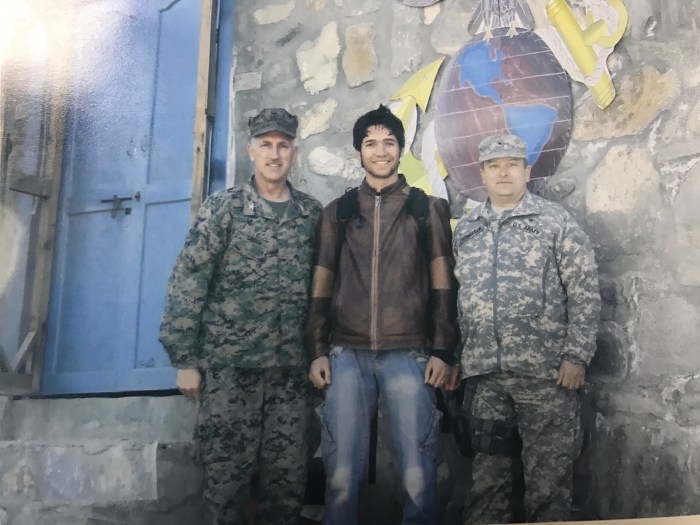
I was only 17 and seeing so much. I was translating for generals, I was going all over the country, experiencing attacks, and seeing losses left and right. It was as if I was training to be a combatant.
Around 2006 the U.S. announced the Special Immigrant Visa (SIV) program. My general immediately wrote me a letter of support, and I was so happy, I ran back home and told my family, but they all started crying. They did not want me to leave so I decided not to apply for the SIV. I saw most of my friends going to the U.S. and it was difficult for me.
Later that year, I was dispatched with special forces in volatile areas. In one situation, flying in a helicopter, I realized I was going to be the first person to parachute out. I was so scared and initially refused. The captain took the first leap, followed by me. He back tracked in order to hold onto my jacket and help steer me to the designated landing spot. That night, Taliban became aware of our location, and so we had to operate in the dark. I did not have night vision goggles, so I used the brake light to see, and the captain swiftly kicked me out of the vehicle, urging me to flee due to our exposure. We huddled in safety about 100 yards away. Captain Dan* and I developed a close bond. He always told me to keep focused on education, and to not get too excited about military life. He asked for my email to keep in touch, but I did not have one. He gave me his anyway. Two days later, I was told he, along with two other soldiers, were killed in a car bomb attack.
In 2008, I was with the Marines, and saw a job opening at the U.S. Embassy for a regional security officer. Imagine this professional job that required you to wear suits, and I went into the interview wearing my scarf, not shaved – I felt so embarrassed. I had three interviews. I guess they liked my natural look. This job with the State Department opened a new world to me – I used a computer and email for the first time (I still have that email) and traveled to the U.S. several times. But I had to stay close to my parents. When I got married in 2012 and we had our three boys – to my parents’ delight – I was even more tied to Afghanistan because my mom and sisters were so attached, and my mom always said, “don’t take away my grandchildren.” She held to this even after I thwarted an embassy attack in 2012, and in 2014 when I really started attracting Taliban threats as I became more well known due to my work. Her conviction made it more difficult to even entertain the idea of applying for SIV.
I also got to “pick my birthday,” for this job which has real significance. I did not know my birthdate because it was never recorded, my family could not remember either, so when I went and got my national ID card, they picked a random month and day for me: July 4. Now I have a different date of birth, but I still celebrate my birthday on the Fourth of July.
August 2021
Fast forward to 2021, I did not know what would happen in Afghanistan. My American colleague kept telling me to leave, and as things got worse, I knew I had to. All the regions were falling to the Taliban, and I could tell that Kabul would be next.
On August 15, the big cities were lost to the Taliban. I had to go to the embassy to destroy files and devices before Kabul fell. Around Noon, some soldiers came to get us. They had a helicopter to take us to the Hamid Karzai International Airport (HKIA), but I wanted to go home. They said I should go with them because the city was under Taliban control, but I said no. Eventually, they let me leave. The city was in chaos – banks were closed, and ATMs did not work, and it was extremely hard to get back home.
I called my wife, who was pregnant with our fourth child, and told her to pack some things. She asked where to go, and I said, “I don’t know.” Somehow, I got back to our home that we shared with extended family, and everyone was there. I had dreams of making my country better for my kids, for my kids to grow up with their aunties and grandparents, but everything changed. I made the decision to leave because I did not want to die and leave my kids without a dad.
That night, I stayed at my friend’s house – I took some clothes, and I grabbed a few pictures and awards from my work with the U.S. even though I had been advised to burn them. That same night, the Taliban came to my house. I waited with bated breath as I saw them on our security camera – scared they would torture my family, but thankfully they left when they found out I was not there.
We could not get to the airport yet because it was a mess, but we had to move to a different location because the Taliban was looking for me by name. My American colleague gave me the name of a U.S. servicemember who was at the airport and would help me and my family. I sent him pictures of my family so we could be easily identified. When we finally arrived at the airport, there were thousands of people already there. A wave of people pulling and pushing. My kids were crying, my wife was eight months pregnant, and it was extremely hot. I decided to go back home and leave my kids with my parents and give myself up to the Taliban. On the way back, we stopped at a restaurant to clean up so my family would not see us so disheveled. That is when my colleague called me and begged me to go back to the airport and said that he would find a way to get us on a plane, so we went.
HKIA to Qatar
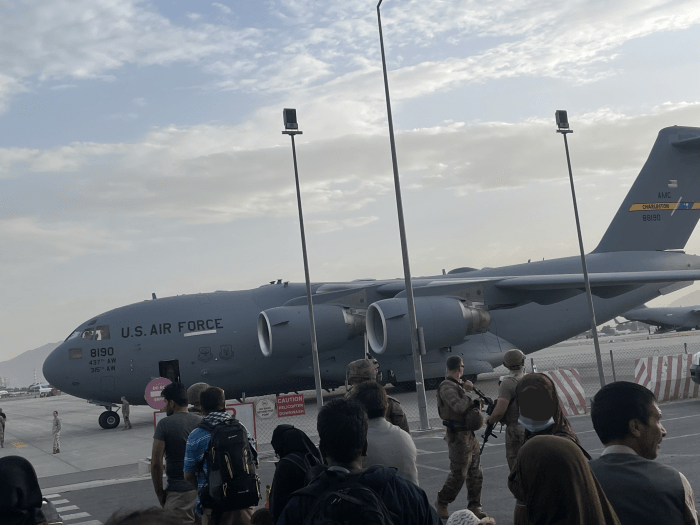
We stood by a gate and waited for someone to spot us. Suddenly, a pick-up truck came by and lifted the gate and rushed us in. We were not able to move that quickly, and a flood of people ran behind us and ran over my wife. One military guy, who I think was sent from God threw his hands towards my wife and lifted her off the ground. We were finally inside the airport, and a few other people also managed to get in.
Once inside, we were given water, but one Marine threatened to send me back because he did not realize who I was. I did not say anything to him. I felt sorry for my wife witnessing this, probably thinking, “this is what you were serving for 16 years.”
We finally boarded the plane and flew to Doha, Qatar. We knew no one there, and we were put in basically, a warehouse. They took our passports to get a visa for Qatar. There was not enough food, not enough space. That day I could not get over what I lost over the last two days. My country, my house, my parents. Seeing ourselves in such conditions broke me.
Doha to the U.S.
Eventually, our visas were granted, and we were transported to a local U.S. military base. The heat was relentless, and having been away from Kabul for two days, and my home for four days, the disorientation was palpable. The sudden shift was especially tough for my children, who now found themselves sleeping in an unfamiliar place, separated from the family who had always cared for them. My wife shared my anxiety. Qatar was not where we wanted to be, and uncertainty about how long we would be there only added to the stress.
During our journey to the base, I saw a familiar face – an American colleague from years past, now part of the emergency evacuation team in Doha. He expressed his remorse and offered assistance. I asked him to tell my coworkers that I had made it to Doha and asked for some food for my kids and wife, which was scarce.
I found out that there was a State Department taskforce, and they were alerted to my case. Finally, I received the call to head to the airport. On August 26, we arrived at the airport and still needed to plead our case to be allowed onto the runway. Eventually, we made it onto the jet that had been arranged for my family and others. Another colleague reminded me not to get too excited, “this is going to be your first and last private jet experience and remember me when you tell your journey.”
En route we found out we were destined for Dulles airport in Washington, D.C. We also heard about the tragic blast at the Kabul airport on the same day, a sobering reminder of the peril we had left behind. I could not help but feel guilty.
Welcome to the DMV
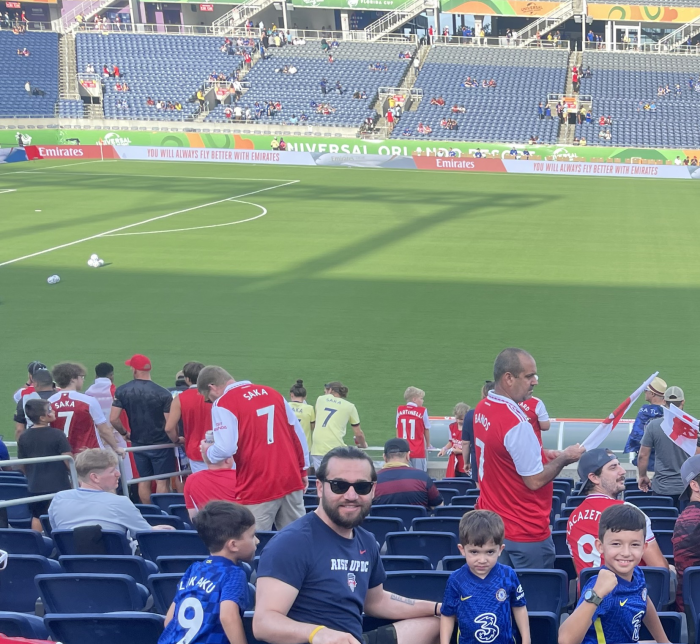
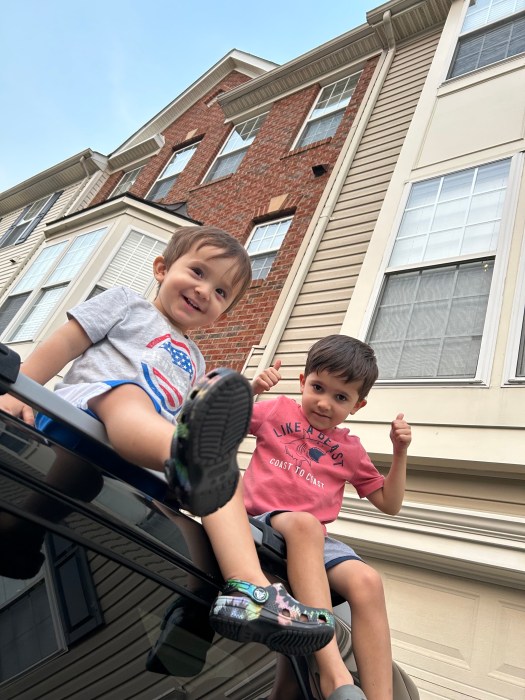
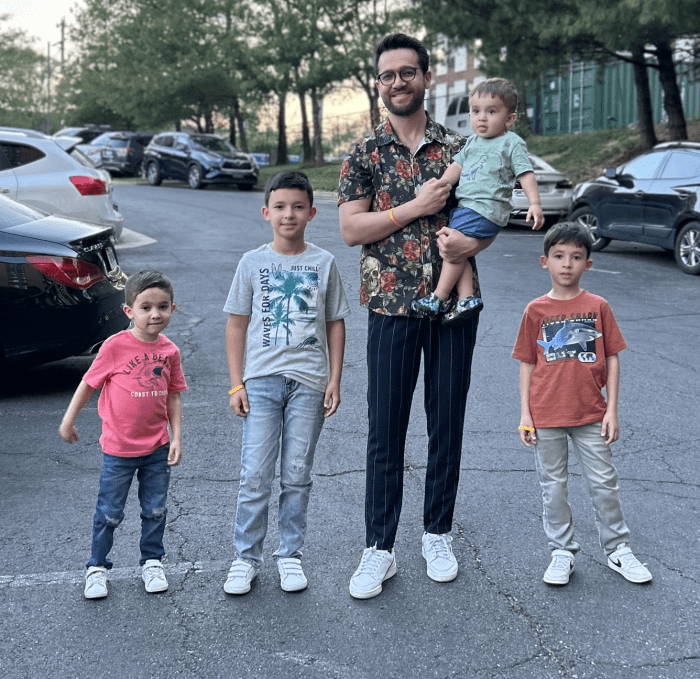
Arriving in the USA, we received a warm welcome from State Department friends with cheers, welcome notes, and toys for my kids. They arranged for us to stay in a hotel, but we had to stay at a different hotel next to a military base in Virginia with others who evacuated Afghanistan. However, we were moved to yet another hotel to quarantine when one of my kids tested positive for COVID. Here we finally had a meal – and not just any meal, but Afghan food.
A week later we moved into a single-family home, offered by the State Department friend in Fairfax, near my wife’s extended family. We were then connected with LSSNCA to help with resettlement services. I was asked if I needed a phone – I only had a SIM card and told them that I had temporary housing with food and a mattress, but my wife might give birth any day. On September 10, my wife went into labor, and we did not know what to do, so we called LSSNCA. They advised us to call 911 or go to the nearest hospital. We went to INOVA Fairfax, and they took us in without question.
Ironically, our son was born on September 11. One of the saddest days suddenly became the happiest for us. My whole life’s trajectory has revolved around 9/11. We named our son Kourosh, after a Persian emperor.
We continued receiving services from LSSNCA. My wife was also going through depression, and I remember the support from LSSNCA. Helping her, helping me with my kids, checking up. I was also receiving rent support and some other services. At some point, I was asked what I thought about working with LSSNCA. I had planned on working with U.S. government contractors, but I loved the idea of working with my people because I love my country and I thought working with LSSNCA meant that I was going to help my people.
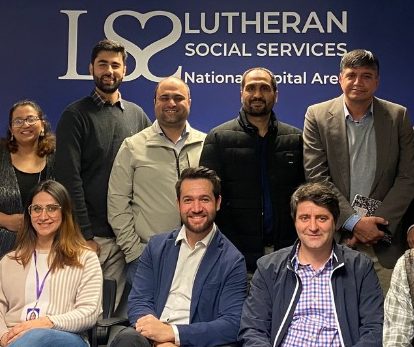
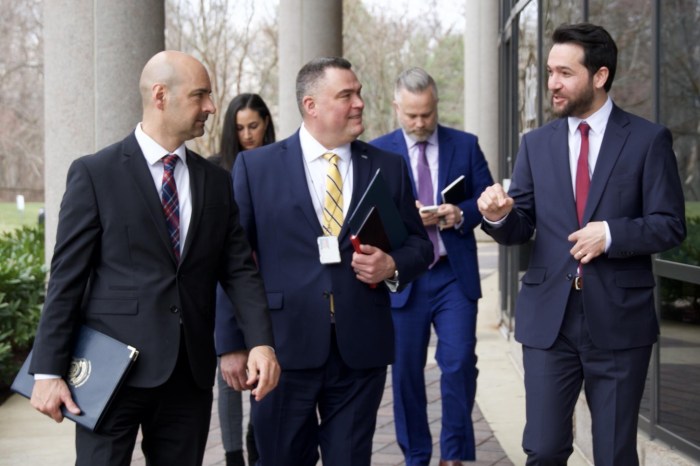
In June 2022, I began working at LSSNCA as a program manager, starting a fresh chapter – and new shift – in my career. Almost a year later, I was promoted to director of Virginia’s employment services. We have since bought a house, and my family is doing well. My wife is learning English and would like to start working, our kids are happy in school, and want to be soccer players when they grow up. My family in Afghanistan is getting older. I talk to them every day, but I have to be a U.S. citizen in order to bring them here, which I hope to do.
This experience taught me an important lesson – to not lose hope when there is uncertainty surrounding you. I am also grateful for the trust I had in my friends and colleagues, knowing they would care for me and get me to where I am today.
 Serve Boldly